Confidence without Competence, aka Armchair Expertise - Part 2 of 6, a Response to Grant Genereux's "Are Supplements Ruining the Low Vitamin A Diet?"
Originally posted on Substack on September 17, 2025
Jump To: Part 1, Part 2, Part 3, Part 4, Part 5, Part 6...as responses to Grant’s article here.
Grant’s Supplement Misadventures
There are definite reasons why Grant is frustrated with “supplements” in general…and it isn’t the supplements’ fault.
Something that’s bothered me for a long time now is that early on in this low vA diet project I had two of my friends, and of my vintage, join me in this experiment. They both made great progress and sailed through in recovering their health without any setbacks. So, what are the differences between us old guys and these other people who have had a bad result? Well, one of the key differences is that some of these other people have been taking certain supplements and we weren’t. Additionally, I think these other people might have taken in some very bad advice too.
Let’s head into Grant’s known supplement history then, as it’s quite telling.
Here's what Grant said in a 2019 email to me:
“Hi Garrett,
Sounds good. I agree, that supplements will probably be required.”
Sounds pretty pro-supplements to me! Let’s go deeper.
Six years later, Grant said the following in his 10-year update post:
“Using diet alone
Relying too much on diet alone was probably another mistake. Being generally against taking supplements I never seriously investigated many of them other than zinc and taurine.”
That statement obviously implies he regrets not taking potentially useful supplements…likely because he knew of some and chose to stop taking them, as you will see. It seems that Grant realizes his own decision-making skills around supplements leave much to be desired. This would be frustrating, and will become more clear as we go on.
Grant & Lutein
There was that time when Grant was doing his “prison diet”, and in spite of having decided that “vitamin” A wasn’t good for him, he mind-bogglingly chose to take a lutein & zeaxanthin supplement (carotenoids, aka “plant vitamin A”):
“I foolishly thought that I should supplement with lutein and zeaxanthin. It didn’t hit me right away; instead it wasn’t until after six weeks into that supplementation I had realized my mistake.”
Whoops.
A “foolish” decision that “didn’t hit [him] right away” and took him a full “six weeks” before he “realized [his] mistake”. Why he chose to take a multi-carotenoid supplement in the first place makes absolutely zero sense. It took him (a relatively smart guy) six weeks to realize it. His “little bit of carelessness was a huge setback, and it easily cost [him] at least another 6 months in more recovery time.”
I’d say he was lucky he realized the problems in only a six-week timeframe. Others out there are taking “vitamin” A-related supplements for years and decades without realizing the slow destruction they are causing. This speaks to the individuality of reactions to various supplements, including the bad ones.
Grant & Zinc
Then there was the time Grant took a zinc supplement. From another of our email chats in 2019:
“RE: Zinc,
During the first year or so of my diet I did supplement with Zinc. I took a 50 mg tablet about once every two weeks. A few days after taking it I did feel that my inflammation had subsided some. However, I was concerned about getting too much zinc, so I did not take it on a regular basis. Rather, I decided that I was probably getting enough with the meat in diet. Each person will have to monitor what amount is best for them.”
Grant supplemented zinc in the first year of his “prison diet”. As far as my searching goes, Grant has never publicly admitted to having a positive response to taking a zinc supplement. I’ve only seen it in that email to me.
Remember he supplemented zinc his entire first year of the “prison diet” when he talks about why he didn’t have any “detox setbacks”, yet others did. He also took activated charcoal during the first year (or did he?). We’ll get to that.
Let’s talk about zinc. Zinc is one of the most crucial minerals to “vitamin” A detox there is. Zinc is well-known to be deficient in modern folks, our food supply, and the soil. It is critically necessary in the body’s detoxification (alcohol dehydrogenase, aka ADH) and protection mechanisms (retinol-binding protein, aka RBP) against “vitamin” A toxicity.
What (unsurprisingly) happened then, when Grant took a zinc supplement?
He felt better!!!
The fact he felt better for days after taking 1 pill means that he was likely functionally deficient, and improving his zinc status for a time helped his entire system run better.
After noticing only improvements, with no evidence of any toxicity symptoms, Grant then decided to only take it once every two weeks or so for a year, irregularly at that, and then he quit taking it for good. Another poor decision made around supplements.
Had he done his due diligence in the zinc research, he would find that the lowest daily dosing of elemental zinc from supplements that caused zinc toxicity problems in the case study literature is 50 mg/day or more for extended periods. Not 1/14th of that, aka 50 mg every two weeks. There is zero scientific evidence for his fear of zinc supplement toxicity at his dosage. His symptomatic improvements showed he was on the right track!
[As an aside, some people have negative responses to even very low doses of zinc in their early stages of the detox process. This is likely due to the zinc “stirring up” stored “vitamin” A toxicity and/or copper toxicity. Why do I not believe this reaction is zinc toxicity? Because over time, as these people get less toxic, it is commonplace for their zinc tolerance to improve over time. To help out those with low tolerances for zinc (and for kids), I purposely made a 2 mg/drop low-dose zinc liquid, in addition to our 15 mg and 30 mg capsules, specifically so people could find their tolerable dose.]
As I am quite familiar with the zinc literature, my foundational supplemental dose of elemental zinc for most people on a daily basis is 30 mg/day (assuming they tolerate that dose, not everyone does, and that’s okay!). When people are actively testing with us (we look at both blood zinc and hair zinc), we may choose to have people experiment above that amount, to correct the deficiency sooner. Some people tolerate it, some don’t, and their dose is adjusted accordingly.
We also advise them if they are not continuing to test every six months to facilitate adjustments, that after 6 months of taking any dose higher than 30 mg/day, they should return to the foundational 30 mg/day dose until they test again and we can re-assess. This is intentional, so people don’t take higher doses than they need over the long-term.
By looking at:
-
A person’s symptom picture
-
Their positive or negative reactions to supplementation
-
Only adjusting one supplement at a time
-
Slowly increasing doses over time to figure out the best dose
-
Combining all that with lab analysis
…we get an extremely comprehensive view of what is working and what isn’t for an individual, while avoiding toxicity issues. What we do is not what Grant does.
For lots more info on zinc, see my livestream #204 below.
Grant & Charcoal…Maybe He Did, Maybe He Didn’t?
Grant mentions (activated) charcoal as a potential supplement to assist with “vitamin” A detox multiple places, including:
-
1st e-book, pages 376-377
-
3rd e-book, page 80
-
“I did not try activated charcoal as part of my recovery process. However, I think it could be very beneficial.” (comment of Grant’s from 2018)
-
So he NEVER used activated charcoal?
-
-
“One question I’ve been asking myself is why didn’t I encounter the detox setback (at least not severely)? Additionally, I have some friends (and of my vintage) who have taken on this diet, and they have also not encountered the detox setback. Why? What was common between us? We all used activated charcoal and maintained a reasonable amount of soluble fibre from beans. I wrote about activated charcoal in my eBooks and about how it is commonly used to rescue people and animals from acute poisonings. Well, we now know that having a surge of extra toxic bile being reabsorbed is exactly that; an acute poisoning. Except it’s even worse for us because our now acute poisonings are happening almost everyday.
I used activated charcoal for about the first year of my own diet. I was taking about a ¼ teaspoon of it every 2nd or 3rd day. I wasn’t super consistent about taking it, but I do think what I did take was helpful. My big mistake was not continuing to use it much after that first year. I now think my overall recovery would have been considerably faster if I had kept taking the activated charcoal. (comment of Grant’s from 2019)
-
So he DID use activated charcoal for THE ENTIRE FIRST YEAR.
-
He admits his “big mistake was not continuing to use it much after that first year”, because in hindsight he believed it was helpful and would have accelerated his progress.
-
Why did he not resume taking it? Another admittedly poor decision around supplements.
-
These comments were ~1 year apart, 5-6 years into his “prison diet”. Since they both cannot be true, is it purposeful dishonesty, or is there a memory issue at play here?
Now compare these two statements from Grant:
#1 - “Additionally, I have some friends (and of my vintage) who have taken on this diet, and they have also not encountered the detox setback. Why? What was common between us? We all used activated charcoal…” (2019)
#2 - “Something that’s bothered me for a long time now is that early on in this low vA diet project I had two of my friends, and of my vintage, join me in this experiment. They both made great progress and sailed through in recovering their health without any setbacks. So, what are the differences between us old guys and these other people who have had a bad result? Well, one of the key differences is that some of these other people have been taking certain supplements and we weren’t.” (2025)
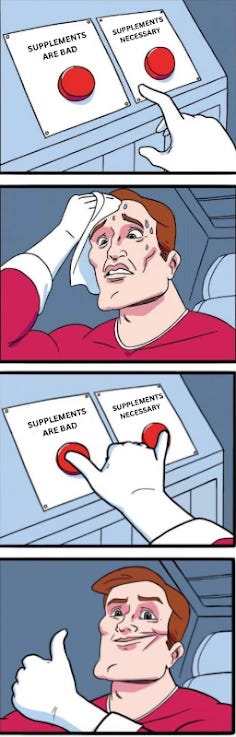
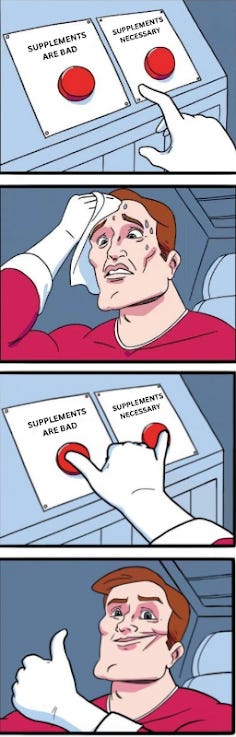
If you’re finding it hard keeping all this straight, you’re not alone. It seems we have two distinct Grants when it comes to supplement opinions.
Summarizing Grant’s Supplement Stance(s)
-
Grant is generally anti-supplement, yet he says he regrets his lack of utilizing supplements more along his detox journey.
-
He acknowledged that supplements are likely going to be necessary in this process, yet supplements are “ruining” the low vA diet.
-
Grant often fails to mention (or is it remember?) that he DID take two supplements—zinc and activated charcoal—on a regular basis during the entire first year of his detox. He described them both as helpful, yet he quit using both of them.
-
Sometimes he thinks that people other than him and his vintage buddies got the “detox setback” because they DID take supplements, and other times he thinks it’s because they DIDN’T take supplements.
It appears that the real issues here are Grant’s decision-making processes around supplements and his shaky recall of these things.
Painting “supplements” with the broadest brush possible is another critical mistake.
The logical fallacies Grant presents are as follows:
-
Secundum quid (fallacy of accident) - taking a qualified truth (“some supplements may be harmful”) and over-extending it to an absolute claim (“all supplements are harmful”).
-
Special pleading - when a person makes an exception for themselves (“all supplements are bad…except the ones I like”).
When people know they aren’t good at something, they should refrain from giving advice on that topic to others. That is not what is happening here.
To be continued with Part 3 on the “Miracle Molecule” known as Lactoferrin…

Written by Garrett Smith